

the 7 churches of Revelation : Philadelphia


BEYOND THE SERMON
The Seven Churches of Jesus • Week Seven
Philadelphia: The Church of Brotherly Love
A deep-study guide on Revelation 3:7-13 • Covington Community Church
Central truth: Little strength. Great faith. An open door. An unshakable promise.
Philadelphia is one of only two churches (with Smyrna) that receives no rebuke from Jesus. It was not large, powerful, or influential—Jesus Himself says it had “little strength.” Yet it kept His Word, refused to deny His name, and was handed a door no one could shut. This guide goes beneath Sunday’s message: the earthquake-scarred city behind the letter, the Greek behind “brotherly love,” the Old Testament story behind the “key of David,” and the promises Jesus makes to those who hold on.
1. Read the Text
|
“To the angel of the church in Philadelphia write: These are the words of him who is holy and true, who holds the key of David. What he opens no one can shut, and what he shuts no one can open. I know your deeds. See, I have placed before you an open door that no one can shut. I know that you have little strength, yet you have kept my word and have not denied my name. I will make those who are of the synagogue of Satan, who claim to be Jews though they are not, but are liars—I will make them come and fall down at your feet and acknowledge that I have loved you. Since you have kept my command to endure patiently, I will also keep you from the hour of trial that is going to come on the whole world to test those who live on the earth. I am coming soon. Hold on to what you have, so that no one will take your crown. The one who is victorious I will make a pillar in the temple of my God. Never again will they leave it. I will write on them the name of my God and the name of the city of my God, the new Jerusalem, which is coming down out of heaven from my God; and I will also write on them my new name. Whoever has ears, let them hear what the Spirit says to the churches.” |
Read the passage twice—once silently, once aloud. Notice that Jesus gives Philadelphia only one command (“Hold on,” v. 11). Everything else is either a description of who He is, a description of what they have done, or a promise of what He will do. Count the promises; there are at least seven.
2. The Sermon in Brief
Point 1 — Little strength does not mean little faith. Jesus says “I know that you have little strength, yet you have kept my word.” That little word “yet” is the hinge of the letter. Faithfulness is not measured by how powerful we feel but by whether we refuse to quit. God has always worked this way—David before Goliath, Gideon the least in his family, five loaves and two fish. Little becomes much when it is placed in His hands.
Point 2 — Jesus opens doors that no one can shut. Before Jesus mentions the open door, He identifies Himself as the One who holds the key of David. The power is not in Philadelphia; the power is in the One holding the key. When He opens a door, walk through it by faith. When He shuts one, stop trying to kick it back open. Do not worship the door—trust the One who holds the key.
Point 3 — Those who remain faithful will overcome. To a church in earthquake country, Jesus promises to make the overcomer a pillar that will never have to leave. He writes three names on them: the name of God, the name of the new Jerusalem, and His own new name—the language of belonging. Genuine love produces endurance, and “by this everyone will know that you are my disciples, if you love one another” (John 13:35).
|
Insight Sardis and Philadelphia sit back-to-back in Revelation 3, and they are mirror images. Sardis had a big reputation and no life; Philadelphia had little strength and real faithfulness. The world measured both churches by the same yardstick and got both of them wrong. Jesus measures by a different standard: “I know your deeds.” |
3. The City Behind the Letter
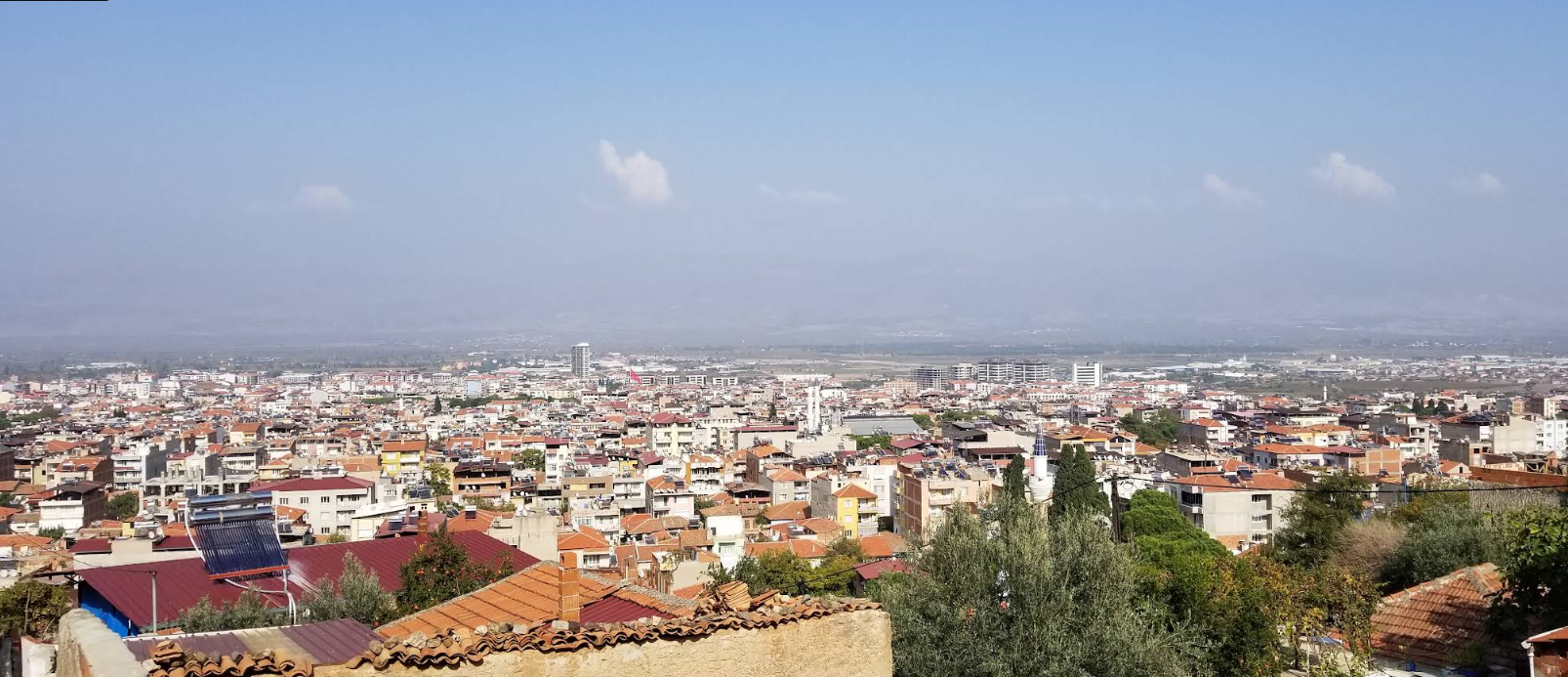
Philadelphia (modern Alaşehir, Turkey) sat about 28 miles southeast of Sardis on the imperial road that ran from Rome’s port at Troas through Pergamum and Sardis into the interior of Phrygia. It was the youngest of the seven cities, founded in the second century BC by the kings of Pergamum and named for the loyalty of King Attalus II to his older brother Eumenes II—Attalus was nicknamed Philadelphos, “brother-lover.” The city was built as a missionary outpost to carry Greek language and culture eastward, which makes Jesus’ “open door” image especially fitting: Philadelphia was a gateway city by design.
Its greatest weakness was geological. Philadelphia stood on the edge of a volcanic plain and was devastated by the great earthquake of AD 17 that also flattened Sardis. Aftershocks continued for years; the historian Strabo reports that the walls were constantly cracking and that many residents lived outside the city in the fields, afraid to go back in. Emperor Tiberius remitted the city’s taxes and funded rebuilding, and in gratitude the citizens took a new name—Neocaesarea, “New Caesar-town.” Later, under Vespasian, they added another imperial name, Flavia. A city that had lived through the shaking, fled its own buildings, and twice taken a new name would hear verse 12 with unusual clarity.
|
Date |
Event |
Why it matters for Revelation 3 |
|
c. 189–138 BC |
City founded by the Pergamene kings; named for Attalus II Philadelphus, famed for loyalty to his brother Eumenes II |
The city’s very name is “brotherly love” (v. 7 heading) |
|
2nd century BC |
Built as a deliberate outpost to spread Greek culture into Phrygia—the “gateway to the East” |
A door-city receives the promise of an open door (v. 8) |
|
AD 17 |
Catastrophic earthquake; aftershocks for years; residents live outside the walls in fear |
Jesus promises a pillar that “never again will leave” (v. 12) |
|
AD 17 onward |
Tiberius grants tax relief; city renamed Neocaesarea in gratitude |
Jesus promises to write a new name on the overcomer (v. 12) |
|
c. AD 70s |
Renamed again, Flavia, under Vespasian |
Names given by emperors fade; the name Jesus writes is permanent |
|
c. AD 95 |
John receives the Revelation on Patmos; letter sent to Philadelphia |
A small church in a hard city is commended without rebuke |
|
AD 1390 |
Philadelphia is the last Byzantine city in Asia Minor to fall to the Ottoman Turks—it held out longer than any of its neighbors |
The church that “held on” outlasted every other city of the seven |
4. Word Studies
Several Greek terms in this short letter carry more than the English suggests. Pronunciations are approximate.
|
Term |
Meaning |
Where and why |
|
Philadelpheia (fil-ad-EL-fee-ah) |
“Brotherly love,” from phileō (to love, feel affection) + adelphos (brother). The same word describes Christian family love in Romans 12:10 and 1 Peter 1:22. |
v. 7 — The city name is the sermon title. The letter never uses the word “love” for the church, yet love is its whole atmosphere. |
|
hagios, alēthinos (HAG-ee-os, al-ay-thee-NOS) |
“Holy” and “true”—alēthinos means genuine, real, the original rather than a copy. |
v. 7 — Jesus is the real thing in a city full of imperial titles and a synagogue that claimed a Jewish identity it did not truly hold. |
|
kleis Dauid (KLICE dah-WEED) |
“Key of David.” A key is authority over access—the right to admit or exclude. Echoes Isaiah 22:22 (see section 5). |
v. 7 — Jesus, not Rome and not the synagogue, decides who enters the kingdom. |
|
thyra ēneōgmenē (THOO-rah ay-ne-og-MEN-ay) |
“An opened door”—perfect passive participle: opened at some point and standing open now. The opening is Jesus’ act; the open state is permanent. |
v. 8 — Paul uses the same image for Gospel opportunity (see section 6). |
|
mikran dynamin (mik-RAN DOO-nah-min) |
“Little power.” Dynamis is the root of “dynamite.” Not “no strength”—a little. Probably a small, poor congregation with no civic clout. |
v. 8 — The one honest weakness Jesus names, and He names it without criticism. |
|
tēreō (tay-REH-oh) |
“To keep, guard, watch over.” Used three times: they kept His word (v. 8), kept His command (v. 10), and so He will keep them (v. 10). |
vv. 8, 10 — Their keeping and His keeping are the same verb. Faithfulness is answered with faithfulness. |
|
hypomonē (hoo-po-mo-NAY) |
“Patient endurance,” literally “remaining under.” Not passive waiting but steady load-bearing—the quality of a pillar. |
v. 10 — “My command to endure patiently” could be rendered “the word of my endurance”: endurance modeled on Christ’s own. |
|
stephanos (STEF-ah-nos) |
The victor’s wreath awarded at the games, not a king’s crown (diadēma). The same crown promised to Smyrna (Revelation 2:10). |
v. 11 — A reward that can be forfeited by letting go, not a salvation that can be lost. |
|
stylos (STOO-los) |
“Pillar, column.” Pillars in ancient temples were often inscribed with the names of honored citizens or donors. |
v. 12 — Permanence and honor, in a city where pillars fell and people fled. |
|
naos (nah-OS) |
The inner sanctuary, the dwelling place of God—not the whole temple complex (hieron). |
v. 12 — The overcomer is placed permanently in God’s own presence. |
|
nikaō (nik-AH-oh) |
“To conquer, overcome, be victorious.” Root of the name Nike. Appears in every one of the seven letters. |
v. 12 — For Philadelphia, overcoming simply means continuing to hold on. |
5. The Key of David: Isaiah 22 and Revelation 3
Jesus’ title in verse 7 is drawn almost word for word from Isaiah 22:15-25. There, God removes Shebna, a corrupt steward of the royal household, and gives his office to Eliakim son of Hilkiah. The steward carried the key to the palace on his shoulder; he alone decided who got in to see the king. Eliakim is a picture of Jesus—but the picture has a built-in limit that only Jesus fulfills.
|
|
Eliakim (Isaiah 22) |
Jesus (Revelation 3) |
|
The key |
“I will place on his shoulder the key to the house of David” (Isaiah 22:22) |
“Who holds the key of David” (v. 7) |
|
The authority |
“What he opens no one can shut, and what he shuts no one can open” (22:22) |
The identical phrase—Jesus applies Eliakim’s job description to Himself |
|
The role |
Steward over the royal household; controls access to the king |
Steward and King in one; controls access to the kingdom itself |
|
The peg |
“I will drive him like a peg into a firm place” (22:23)—but “the peg driven into the firm place will give way… and it will be cut down” (Isaiah 22:25) |
“I will make [the overcomer] a pillar… Never again will they leave it” (v. 12)—a peg that never gives way |
|
The glory |
“He will become a seat of honor for the house of his father” (22:23) |
Believers are inscribed with the name of God, the city, and Christ’s new name (v. 12) |
Eliakim was faithful, but even his firm peg eventually failed. Jesus is the greater Eliakim: the door He opens stays open, and the place He gives is never lost. See also Matthew 16:19 and Revelation 1:18, where Jesus holds “the keys of death and Hades.”
6. The Open Door in the New Testament
Philadelphia was a gateway city, and the “open door” was one of Paul’s favorite images for a Gospel opportunity. Tracing it shows what Jesus was likely placing before this small church.
|
Passage |
What the door is |
Observation |
|
God “had opened a door of faith to the Gentiles” |
The first “open door” in the New Testament is missionary—people coming in |
|
|
“A great door for effective work has opened to me, and there are many who oppose me” |
An open door and opposition arrive together; the door does not remove the enemies |
|
|
“The Lord had opened a door for me” at Troas |
Paul still left Troas—an open door is an invitation, not a command to stay forever |
|
|
“Pray… that God may open a door for our message” |
Doors are prayed for, not forced; Paul asks from prison |
|
|
“I have placed before you an open door that no one can shut” |
The only door in Scripture guaranteed to stay open—because Jesus holds the key |
|
|
“I stand at the door and knock” |
Two letters later, at Laodicea, Jesus is outside a door the church has shut on Him |
7. Two Hard Verses: The Synagogue and the Hour of Trial
Verse 9 — “The synagogue of Satan”
Jesus used the same phrase to Smyrna (Revelation 2:9). In both cities the church was small and the local synagogue was large, and Jewish opposition apparently included denouncing believers to the Roman authorities. Jesus’ point is not that Jews as a people are Satan’s; it is that anyone who “claims to be” God’s people while persecuting God’s people has revealed whose work they are actually doing (compare Romans 2:28-29). The promise that they will “fall down at your feet” reverses Isaiah 60:14, where the nations bow before Israel—here the persecutors will one day acknowledge that the despised little church was the one Jesus loved.
Verse 10 — “I will keep you from the hour of trial”
The Greek is tērēsō ek tēs hōras—“I will keep you out of the hour.” This is not “the trial” but “the hour of trial,” a specific period, “going to come on the whole world.” Since Philadelphia’s local trials were already under way, the reference reaches beyond the first century to the worldwide time of testing described in Revelation 6–19, which Jesus called “great distress, unequaled from the beginning of the world” (Matthew 24:21) and Jeremiah called “a time of trouble for Jacob” (Jeremiah 30:7). The promise is not merely protection through that hour but removal from it—the same rescue Paul describes when believers are “caught up together” (1 Thessalonians 4:16-17) and delivered “from the coming wrath” (1 Thessalonians 1:10; compare Revelation 3:10 with Revelation 4:1, where a door opens in heaven and John is told, “Come up here”). The faithful church is promised a door out before the hour comes on “those who live on the earth”—a phrase Revelation reserves for the unbelieving world (Revelation 6:10; Revelation 13:8).
|
Why it matters Verse 10 turns verse 11 from a threat into a comfort. “I am coming soon” is not the announcement of judgment on Philadelphia; it is the reason a tired church with little strength can hold on. The next thing on the calendar for a faithful church is not the hour of trial but the return of the One who holds the key. |
8. The Promises to the Overcomer
Every letter ends with a promise to “the one who is victorious.” Philadelphia’s promise, verse 12, is the most personal of the seven—three inscriptions on a single pillar.
|
Promise |
Background |
Fulfillment |
|
“A pillar in the temple of my God” |
Pillars fell in AD 17; honored citizens had their names carved on temple columns |
The overcomer is a permanent, honored fixture in God’s presence (1 Kings 7:21; Galatians 2:9) |
|
“Never again will they leave it” |
Philadelphians repeatedly fled the city during aftershocks |
No more running, no more instability, no more exile (Revelation 21:3-4) |
|
“The name of my God” |
The high priest wore “Holy to the LORD” on his forehead |
Ownership and consecration; compare the seal of the 144,000 (Revelation 7:3; Revelation 22:4) |
|
“The name of the city of my God, the new Jerusalem” |
Philadelphia had twice taken a new civic name from an emperor |
Citizenship in a city that comes down from heaven and does not shake (Revelation 21:2; Hebrews 12:22-28) |
|
“My new name” |
A new name signals a new identity and relationship |
Intimate belonging to Christ Himself (Revelation 19:12; Isaiah 62:2) |
9. Reflection Questions
Work through these on your own or with your small group. Write your answers in the space provided.
1. Jesus says “I know that you have little strength, yet…” Where in your life or in our church does the word “yet” belong right now? What are you still doing faithfully even though your strength feels small?
2. Name a door you once pushed, forced, or worried over that Jesus never opened. Looking back, what did His closing of that door protect you from or lead you toward?
3. Paul’s open door at Ephesus came with “many who oppose me” (1 Corinthians 16:9). Is there an opportunity in front of you that you have hesitated to walk through because opposition came with it?
4. Jesus gives Philadelphia one command: “Hold on to what you have.” What, specifically, do you have that is worth holding on to? What is trying to take it?
5. To a church that kept fleeing its buildings, Jesus promised a pillar that never leaves. What in your world is shaking right now, and how does the promise of an unshakable place change the way you carry it?
6. “By this everyone will know that you are my disciples, if you love one another” (John 13:35). If someone measured Covington Community Church only by its brotherly love, what would they conclude? What would it take for that to be the first thing people notice?
10. Further Study
|
Passage |
Connection to Philadelphia |
|
Shebna, Eliakim, and the key of David—the source of Jesus’ title in verse 7 |
|
|
Smyrna: the other church with no rebuke, the same “synagogue of Satan,” the same crown |
|
|
Sardis: Philadelphia’s mirror image—reputation without life vs. life without reputation |
|
|
Gideon, “the least in my family”—little strength, mighty warrior |
|
|
“My power is made perfect in weakness”—the theology behind “little strength” |
|
|
Paul’s open door with opposition attached |
|
|
A kingdom that cannot be shaken, for a city that could not stop shaking |
|
|
The catching up of the church and the day of the Lord—background to verse 10 |
|
|
The new Jerusalem and the name on their foreheads—verse 12 fulfilled |
Next week: Laodicea, the seventh and final church—neither hot nor cold (Revelation 3:14-22).
