

the 7 churches of Revelation : Thyatira
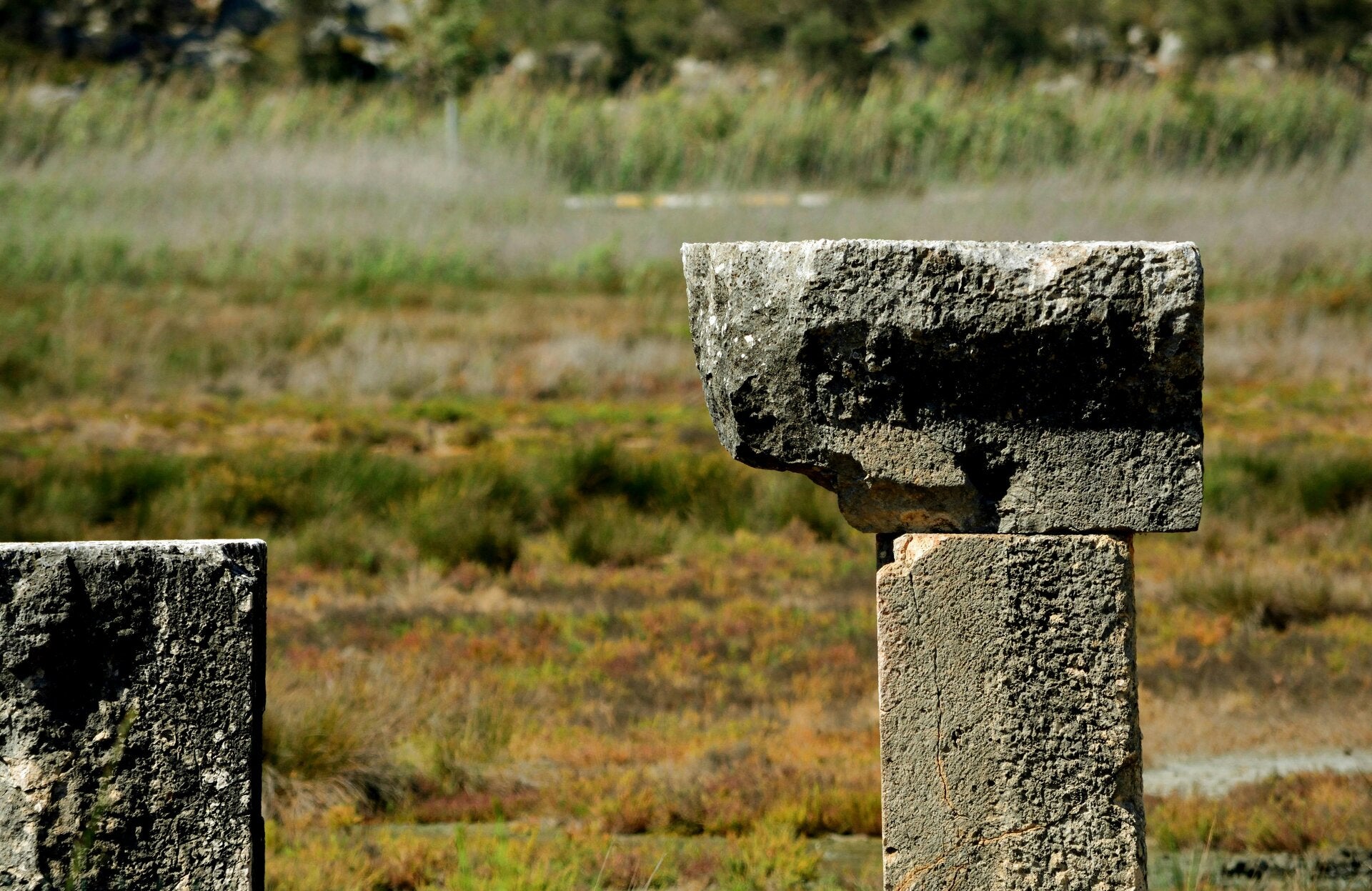


5. Thyatira: The Pagan Church
THE SEVEN CHURCHES OF JESUS
The Church at Thyatira
Beyond the Sermon
A Deeper Study of the Tolerant Church
Word studies, historical background, and further study beyond Sunday's message
1. How to Use This Guide
This guide goes past what Sunday's message could cover in fifteen minutes. Use it on your own in the days following the sermon, or as the backbone for a small-group session — there is enough here for one longer discussion or two shorter ones. Nothing here contradicts the sermon; it digs into the history, language, and larger biblical storyline standing behind it.
2. The Sermon in Brief
Thyatira was the least significant of the seven cities, yet it receives the longest of the seven letters. Jesus opens with the fullest commendation any of the churches receives — love, faith, service, perseverance, and works that are increasing (v. 19). Then He names the one thing none of that goodness could cover: "You tolerate that woman Jezebel" (v. 20) — a self-styled prophet teaching believers they could follow Christ and still participate in idolatry and immorality. Jesus has given her time to repent (v. 21); judgment now falls on her and her followers (vv. 22–23). To the faithful remnant He gives no new burden, only a command — "hold on to what you have until I come" (v. 25) — and a promise: authority over the nations, and the Morning Star, who is Christ Himself (vv. 26–28; 22:16).
|
Core insight: a church can grow in love and activity while shrinking in discernment. Good works do not excuse compromise — and God's patience with sin is never His permission for it. |
3. Word Studies
Sunday's message centered on the words tolerate, Jezebel, hold on, and Morning Star. Here is the fuller set of terms that shape this letter.
|
Term |
Original |
Meaning & Significance |
|
Tolerate |
ἀφίημι (aphiēmi) |
Literally "to let go, to leave alone, to permit." The same verb is translated "forgive" elsewhere (Matt. 6:12). Thyatira's sin was not active participation by all, but a permissive leaving-alone of what should have been confronted. |
|
Jezebel |
Ἰεζάβελ (Iezabel) |
The Sidonian queen who married King Ahab and drove Israel into Baal worship (1 Kings 16:31). Used here as a symbolic name for a real influence in the church — see Section 5. |
|
Prophet |
προφῆτις (prophētis) |
The feminine form of "prophet." Scripture affirms true prophetesses (Miriam, Deborah, Huldah, Anna, Philip's daughters); the problem here is the phrase "who calls herself" — a self-appointed authority with no divine commission. |
|
Misleads |
πλανάω (planaō) |
"To lead astray, cause to wander" — the root of our word planet, a "wanderer." Revelation uses this verb for Satan himself (12:9; 20:3, 8, 10). False teaching does not merely inform wrongly; it makes people wander. |
|
Burnished bronze |
χαλκολίβανον (chalkolibanon) |
A rare word found only in Revelation (1:15; 2:18). Thyatira was famous for its bronze-workers' guild; Christ appears to this city with feet of a metal finer than anything its craftsmen could produce. |
|
Deep secrets |
τὰ βαθέα (ta bathea) |
"The deep things." Jezebel's party likely claimed access to deeper spiritual knowledge; Jesus exposes their true source — "Satan's so-called deep secrets" (v. 24). See Section 6. |
|
Hold on |
κρατέω (krateō) |
"To grip firmly, to seize and not let go" — from kratos, "strength." Not a passive holding but a white-knuckled grasp, as of someone clinging to a rope in a storm. |
|
Victorious |
νικάω (nikaō) |
"To conquer, to overcome" — used in every one of the seven letters. Here uniquely paired with "does my will to the end" (v. 26): overcoming is defined by persevering obedience. |
|
Morning Star |
ἀστὴρ ὁ πρωϊνός (astēr prōinos) |
The brightest object in the pre-dawn sky (the planet Venus), announcing that night is ending. Christ names Himself "the bright Morning Star" in Rev. 22:16 — the reward is Himself. |
4. Thyatira: The City Behind the Letter
Of the seven cities, Thyatira is the one we know least about — and that is itself revealing. It had no great temple, no famous library, no imperial cult center of note. Founded (or refounded) around 290 BC by Seleucus I as a military outpost guarding the road between Pergamum and Sardis, it later passed to Rome in 133 BC and settled into life as a working commercial town in the Lycus valley.
What Thyatira did have was trade guilds — more of them, by the surviving inscriptions, than almost any other city of its size in Asia Minor. Wool-workers, linen-workers, dyers, leather-workers, tanners, potters, bakers, slave-dealers, and bronze-smiths all had organized guilds. The city was especially known for its dyeing industry; a locally sourced red-purple dye, likely from madder root, was its signature product. This is why Acts 16:14 introduces Lydia as "a dealer in purple cloth from the city of Thyatira" — the first recorded convert in Europe was a Thyatiran businesswoman, and it is possible the church in her home city traces to her influence.
The guilds are the key to this letter. Membership was not optional for anyone who wanted to make a living in a trade, and every guild had a patron deity — for the city as a whole, Apollo Tyrimnaios, the sun-god, whom the emperor was sometimes identified with as a divine son. Guild life revolved around feasts held in the god's honor: meat sacrificed to the idol was eaten, the god was toasted, and the evening frequently ended in the sexual license for which such banquets were notorious. To refuse the feast was to risk your livelihood; to attend was to participate in exactly what Revelation 2:20 condemns.
Into that pressure stepped a teacher — "Jezebel" — with a reassuring message: you can be a Christian and keep your guild membership. Eat the meat. Attend the feast. It doesn't really touch your spirit. Jesus's opening self-description now lands with full force: to a city whose patron was a sun-god called the son of a god, Christ announces Himself as "the Son of God" (v. 18) — the only time that exact title appears in Revelation.
A Timeline: From Seleucus to the Seven Letters
|
Date (approx.) |
Event |
|
c. 290 BC |
Seleucus I Nicator establishes Thyatira as a garrison town on the Pergamum–Sardis road |
|
c. 190 BC |
Thyatira absorbed into the kingdom of Pergamum after Rome's defeat of the Seleucids |
|
133 BC |
Attalus III bequeaths Pergamum's territory, including Thyatira, to Rome; the city becomes part of the province of Asia |
|
c. AD 50 |
Lydia, a purple-dealer from Thyatira, believes and is baptized at Philippi — the first recorded convert in Europe (Acts 16:11–15) |
|
c. AD 50s–90s |
A church is established in Thyatira; trade guilds dominate civic and economic life |
|
c. AD 95 |
John, exiled on Patmos, records Christ's letter to Thyatira — the longest of the seven (Rev. 2:18–29) |
5. Jezebel: The Queen and the Prophetess
Jesus could have named this influence anything. He chose the most infamous woman in Israel's history. First-century believers steeped in the Old Testament would have heard every echo. Placing the two side by side shows why the name fit.
|
Jezebel of Israel (1 Kings 16–21; 2 Kings 9) |
"Jezebel" of Thyatira (Revelation 2:20–23) |
|
A Sidonian princess who married King Ahab and brought Baal worship into Israel from the outside (1 Kings 16:31) |
A voice inside the church, teaching that Christians could bring pagan worship into their Christian lives |
|
Led God's people into idolatry — 450 prophets of Baal fed at her table (1 Kings 18:19) |
"Misleads my servants" into eating food sacrificed to idols and sexual immorality (v. 20) |
|
Operated through seduction, manipulation, and false religious authority; Elijah's contest was ultimately with her system |
Operated through a claimed prophetic authority — "who calls herself a prophet" (v. 20) |
|
God sent Elijah and gave years of warning through drought, Carmel, and Naboth's vineyard before judgment (1 Kings 17–21) |
"I have given her time to repent" (v. 21) — grace precedes judgment |
|
Judged decisively under Jehu; Elijah's word fulfilled (2 Kings 9:30–37) |
Cast on a bed of suffering; her followers struck down; "all the churches will know" (vv. 22–23) |
|
Israel's tolerance of her cost the nation its spiritual health for a generation |
Thyatira's tolerance of her threatened a loving, faithful, growing church |
Note Jesus's words in verse 23: "I am he who searches hearts and minds." The Old Testament Jezebel was judged by a king. The Thyatiran Jezebel is judged by the One whose "eyes are like blazing fire" (v. 18) — the Son of God who sees what the church chose not to see.
6. What Were "Satan's So-Called Deep Secrets"?
Verse 24 is one of the more puzzling phrases in the seven letters. Jesus commends the faithful in Thyatira for not having "learned Satan's so-called deep secrets" — literally, "the deep things of Satan, as they say." Two main readings have been offered.
The first hears Jesus quoting Jezebel's party with irony. They advertised "the deep things" — a deeper, more mature spirituality available to the enlightened — and Jesus supplies the missing words: the deep things of Satan. On this view the phrase exposes false teaching that dressed itself up as advanced knowledge. This fits patterns that would flower in the second century into full Gnosticism, where some taught that the truly spiritual person could engage in the flesh without harm, because spirit and body were unrelated. It also fits Paul's earlier warning to Timothy about "what is falsely called knowledge" (1 Tim. 6:20).
The second reading takes the phrase more literally: the teaching may have argued that in order to overcome Satan, a believer must first experience his realm — that plunging into the guild feasts and their immorality was a form of spiritual conquest, proving that sin had no power over you. Either way, the practical outcome was the same: a rationale for doing what God forbids while calling it maturity.
|
Whatever the label, the shape of the error is timeless: compromise rarely announces itself as compromise. It calls itself freedom, balance, nuance, maturity, or depth. Jesus calls it by its real name. |
7. The Son of God, the Iron Scepter, and the Morning Star
The way Jesus introduces Himself and the reward He promises are drawn from a single Old Testament text — Psalm 2, the great messianic psalm of the Son and the nations. Setting them side by side shows how carefully this letter is built.
|
"You are my son; today I have become your father" (v. 7) |
"These are the words of the Son of God" (v. 18) — the only use of this exact title in Revelation |
|
"I will make the nations your inheritance" (v. 8) |
"I will give authority over the nations" (v. 26) |
|
"You will break them with a rod of iron; you will dash them to pieces like pottery" (v. 9) |
"That one will rule them with an iron scepter and will dash them to pieces like pottery" (v. 27) — the Son shares His own Psalm 2 authority with the faithful |
|
"Ask me, and I will make the nations your inheritance" — the Son's rule is given by the Father (v. 8) |
"Just as I have received authority from my Father" (v. 27) |
This is a remarkable promise. The authority the Father gives the Son in Psalm 2 — authority over the nations — the Son in turn shares with overcomers. Revelation will develop this: the redeemed are made "a kingdom and priests" who "will reign on the earth" (5:10), and those who share in the first resurrection "reign with him for a thousand years" (20:4–6). The faithful in a working-class town, refusing the guild feasts at the cost of their livelihoods, are promised a share in Christ's coming millennial reign over the very world that was squeezing them.
The Morning Star Through Scripture
|
Passage |
The Star |
|
Balaam's prophecy: "A star will come out of Jacob; a scepter will rise out of Israel" — the star and the scepter appear together, as they do in Rev. 2:27–28 |
|
|
The "morning star" (Latin lucifer, "light-bearer") fallen from heaven — a counterfeit light brought low |
|
|
The prophetic word is a lamp "until the day dawns and the morning star rises in your hearts" |
|
|
Promised to the overcomer in Thyatira |
|
|
"I am the Root and the Offspring of David, and the bright Morning Star" — the promise unveiled as Christ Himself |
The morning star rises while it is still dark. It does not end the night; it announces that the night is ending. To believers holding on in a city where compromise paid and conviction cost, Jesus promises not just a reward at the dawn — He promises the herald of the dawn, which is Himself.
8. Reflection Questions
1. Thyatira's guild system made compromise the path of least resistance — refusing the feast could cost you your livelihood. Where does faithfulness to Christ carry a real economic, social, or relational cost in your life today? How have you responded to that pressure?
2. Jesus commends Thyatira for love, faith, service, and perseverance before confronting them. Why is it so easy for a loving, active church to become a tolerant one? What is the relationship between love and confrontation in the New Testament (see Eph. 4:15; Gal. 6:1; Heb. 12:6)?
3. The word "tolerate" (aphiēmi) means to leave something alone. What is the difference between the patience Scripture commands toward people (Rom. 15:1; Col. 3:13) and the tolerance Jesus condemns toward destructive teaching? How do you tell them apart in practice?
4. "Jezebel" offered Thyatira a way to have Christ and comfort at the same time, and dressed it up as "deep" spirituality. What versions of that message exist today — inside the church, or inside your own reasoning? What makes them attractive?
5. Jesus gave Jezebel "time to repent" (v. 21). Read Romans 2:4 and 2 Peter 3:9. How have you experienced God's patience? Is there anything in your life where you have been mistaking His patience for His approval?
6. The reward promised to Thyatira is authority over the nations and the Morning Star — Christ Himself. How does a clear view of the end of the story (Rev. 20:4–6; 22:16) strengthen your grip on what you have now (v. 25)?
9. Further Study
For continued personal study this week, these passages extend the themes above:
|
Passage |
Connects To |
|
The original Jezebel — Baal worship in Israel, Carmel, and Naboth's vineyard; the background for the name Jesus uses |
|
|
Jezebel's end — the fulfillment of Elijah's word and the pattern behind Rev. 2:22–23 |
|
|
Balaam and the compromise at Peor — the Old Testament root of "eating food sacrificed to idols and sexual immorality" (compare Rev. 2:14, 20) |
|
|
Lydia of Thyatira — a purple-dealer who believed at Philippi and opened her home to the church |
|
|
Paul's teaching on food sacrificed to idols — the fuller New Testament framework Thyatira's believers were called to live by |
|
|
Paul confronts a church that tolerated what it should have addressed — a New Testament parallel to Thyatira's failure |
|
|
The Son and the nations — the source text behind Christ's title and the overcomer's promise |
|
|
The redeemed reigning with Christ — where "authority over the nations" is realized |
|
|
The bright Morning Star — the promise to Thyatira fulfilled in the final chapter |
click the map to bring it to life


