


- He departed bodily (Acts 1:9) — so He returns bodily (Zech 14:4).
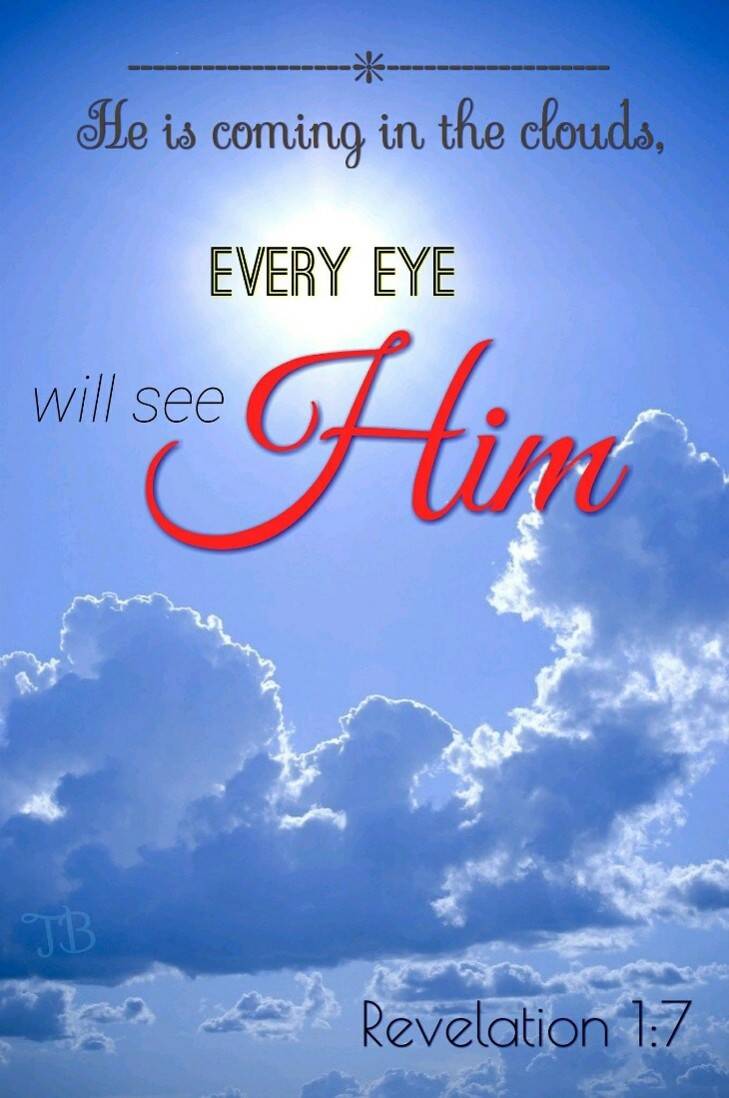
- He departed in a cloud (Acts 1:9) — so He comes with clouds (Rev 1:7).
- He departed from Olivet (Acts 1:12) — so His feet return to Olivet (Zech 14:4).
C O V I N G T O N C O M M U N I T Y C H U R C H
Where Are We In Time · Deep Study Guide
B E Y O N D T H E S E R M O N
THE RETURN OF THE KING
A Companion Study for Personal & Small-Group Use
K E Y SCRIP TURE
Revelation 1:7 · Zechariah 12:10 · Zechariah 14:4
Scripture quotations from the King James Version
How to Use This Guide
This guide picks up where Sunday's message left off and carries the same three texts — Revelation 1:7, Zechariah 12:10, and Zechariah 14:4 — into deeper water. Work through it on your own with a Bible and pen, or use it to lead a small group across one or two sessions. Each section stands on its own, so feel free to linger where the Lord holds your attention. Word studies open up the original languages; comparison tables sort out what can otherwise blur together; the timeline places the King's return within the whole prophetic calendar; and the reflection questions move the truth from the head to the heart to the hands.
✦ ✦ ✦
I. The Sermon in Brief
At the very end of the Tribulation, with the armies of the earth gathered against Jerusalem and the heavens gone dark, Jesus Christ returns — visibly, bodily, and in overwhelming glory — to rescue the world from evil and to begin His reign. He comes with clouds and every eye sees Him (Rev 1:7). He comes with the assembled saints of every age, and conquers not with their swords but with the word of His mouth (Rev 19). His feet touch down on the Mount of Olives, splitting the mountain and opening a way of escape (Zech 14:4). He pours out grace on the nation that pierced Him, and they look on Him and mourn and are saved (Zech 12:10). And then the long usurpation ends: the rightful King takes His throne, and the Kingdom Age begins.
The heart of it — He returns to save. The first movement of the King toward the ones who pierced Him is not vengeance but mercy.
II. Word Studies — The Original Languages
The English carries the meaning, but the Greek and Hebrew add color, weight, and precision.
These are the load-bearing words behind the three texts.
From the Greek (Revelation 1:7; 19)
ἔρχεται erchetai Rev 1:7 — “cometh”
“he comes / he is coming”
A present-tense verb used for a still-future event — the “prophetic present.” Scripture speaks of the return as though it were already underway, because in the mind of God it is as certain as if it had happened. Not “he may come,” but “he is coming.” ὄψεται opsetai Rev 1:7 — “shall see”
“will see, will behold with the eyes”
Future tense of horaō, physical sight. “Every eye” (pas ophthalmos) makes it universal and literal — not spiritual perception, but actual seeing. The return is a public, planet-wide, unmistakable event. ἐξεκέντησαν exekentēsan Rev 1:7 — “pierced”
“they pierced through, transfixed”
John chose the same rare verb here that he used at the cross in John 19:37 — both quoting Zechariah 12:10. The evangelist deliberately links Calvary to the Second Coming: the One they see returning is the very One they crucified. κόψονται kopsontai Rev 1:7 — “wail”
“they will beat the breast in grief”
From koptō, “to cut / to strike.” In the middle voice it means to strike one’s own chest in mourning. The Greek Old Testament uses this exact word in Zechariah 12:10, tying the wailing at His coming to the mourning of repentant Israel.
Βασιλεὺς βασιλέων Basileus basileōn Rev 19:16 — “King of kings”
“King over kings, Lord over lords”
A Hebrew-style superlative: the King who out-ranks and out-reigns every king who ever held a throne. Paired with Kurios kuriōn (“Lord of lords”), it declares an authority that is total, final, and universal.
From the Hebrew (Zechariah 12:10; 14:4)
דַָּקַר dāqar Zech 12:10 — “pierced”
“to pierce through, thrust through, run through”
A violent word — to be run through with a weapon. And the speaker is God: “they shall look upon Me whom they have pierced.” Six centuries before the cross, the Old Testament already speaks of a pierced God.
נַָּבַט nābat Zech 12:10 — “look”
“to gaze intently, to regard, to fix the eyes upon”
Not a passing glance but a fixed, searching gaze. It is the look of dawning recognition — the moment a nation finally sees who He is and who He always was.
סַָּפַד sāpaḏ Zech 12:10 — “mourn” “to wail, to lament, to beat the breast”
The verb for the loud, bodily grief of a funeral. Yet it follows the outpouring of “the spirit of grace and of supplications” (Heb. chen and tachanūnîm) — so this is godly sorrow that leads to life, the weeping of the prodigal come home.
עַָּמַד ʿāmad Zech 14:4 — “shall stand”
“to stand, take a stand, be established, be fixed”
“His feet shall stand” — real feet, on real ground. The word carries permanence: He is not passing through. He has come to take His stand and to stay.
בַָּקַע bāqaʿ Zech 14:4 — “shall cleave”
“to split open, to break in two”
The same verb used when God split the Red Sea (Ex 14:16). The God who once clove the waters to deliver His people now cleaves a mountain to deliver them again. Creation yields to the weight of its returning King.
✦ ✦ ✦
III. Two Comings, Not One — Rapture and Return
One of the most important distinctions in all of prophecy is that Christ’s return unfolds in two phases separated by the seven-year Tribulation. He first comes FOR His church (the Rapture), then later comes WITH His church to the earth (the Second Coming, the subject of this sermon). Collapsing the two into a single event is the root of much end-times confusion. The table below sorts them out.
|
|
The Rapture |
The Return (Second Coming) |
|
Movement |
Christ comes FOR His saints |
Christ comes WITH His saints |
|
Where He meets them |
In the air / clouds (1 Thess 4:17) |
Feet on the Mount of Olives (Zech 14:4) |
|
Visibility |
Sudden, in the twinkling of an eye |
Every eye shall see Him (Rev 1:7) |
|
Timing |
Before the Tribulation (imminent) |
At the very end of the Tribulation |
|
Signs beforehand |
None — it is signless and imminent |
Preceded by the signs of the Tribulation |
|
Primary purpose |
To deliver the Church from wrath |
To rescue Israel and the world; to reign |
|
Direction of travel |
Church rises to meet the Lord |
The Lord descends to the earth |
|
Outcome |
Church to heaven (Bema, Marriage) |
The Kingdom established on earth |
Keep them distinct — The Rapture empties the earth of the Church; the Return fills the earth with the King. Between them lie the seven years of Daniel’s 70th Week.
✦ ✦ ✦
IV. “Every Eye Shall See Him” — The Visible Return
The first coming was veiled; the second is unveiled. Jesus warned against every counterfeit that would say “look, here is Christ” in some secret place, because the true return will need no announcement:
|
MATTHEW 24:27 |
|
“For as the lightning cometh out of the east, and shineth even unto the west; so shall also the coming of the Son of man be.” |
Lightning does not need a herald. When it splits the sky, the whole horizon testifies at once. So it will be with the King — kings and beggars, mockers and worshippers, the living and (at the resurrection) the dead: every eye will lift and see the Son of God returning in glory. The One who stood silent before Pilate will speak, and the nations will fall. The face that was marred will shine like the sun in full strength.
V. The Mount of Olives — Where He Left, Where He Returns
Zechariah 14:4 gives one of the most specific geographic prophecies in Scripture. The King does not merely hover in the clouds; His feet touch a named mountain east of Jerusalem — and the very ground splits beneath Him.
The wonder deepens when you set it beside the Ascension. In Acts 1, Jesus was taken up bodily, a cloud received Him, and two angels promised that “this same Jesus… shall so come in like manner as ye have seen him go.” Where were the disciples standing? Acts 1:12 tells us they returned from the mount called Olivet. He left from the Mount of Olives; He returns to the Mount of Olives. Same Jesus, same place, same scarred feet.
When those feet land, the mountain cleaves in two and a great valley opens — a way of rescue for a besieged and surrounded people. The Deliverer comes, and creation itself makes way.
✦ ✦ ✦
VI. Grace Before Mourning — The Nation That Looks and Lives
Notice the order of Zechariah 12:10 carefully, because the sequence is the gospel in miniature. God moves first: He pours out “the spirit of grace and of supplications.” Only then do they look; only then do they mourn. Grace precedes repentance and produces it. This is not the terror of the condemned but the tears of the reconciled.
And the mourning is not the end. The very next verse opens a fountain:
|
ZECHARIAH 13:1 |
|
“In that day there shall be a fountain opened to the house of David and to the inhabitants of Jerusalem for sin and for uncleanness.” |
The scars they see are the very scars that save them. The King returns with His wounds displayed, because those wounds are His glory and our salvation. What begins as the horror of recognition — “we pierced Him” — ends as the joy of redemption — “and He forgives.” This is the tender center of the whole return: the King’s first act toward the ones who pierced Him is to wash them clean.
VII. The Armies of Heaven — Who Rides With the King
He does not return alone. Revelation 19 shows the heavens opened and the armies of heaven following the King on white horses, clothed in fine linen, white and clean. Jude, quoting Enoch, calls them “ten thousands of his saints” — an uncountable multitude, the people of God from every age.
Two details are worth pausing on. First, their clothing: fine linen, white and clean — which Revelation 19:8 defines as “the righteousness of saints.” They wear not armor but righteousness, because the battle is not theirs. Second, the weapon: not in their hands, but in His mouth — “out of his mouth goeth a sharp sword.” He speaks, and it is finished. The saints come not to fight but to reign; not to win the victory but to share in it.
The honor of it — To be counted in that number is not earned but purchased — by His own blood. If you belong to Him, you ride in that train.
✦ ✦ ✦
VIII. The Kingdom Age Begins — The Reign of the Rightful King
The return is not the end of the story but the dawn of the age creation has groaned for since Eden. “The kingdoms of this world are become the kingdoms of our Lord, and of his Christ; and he shall reign for ever and ever” (Rev 11:15). Revelation 20 measures the first phase of that reign in a recurring phrase — chilia etē, “a thousand years” (the Millennium) — and Zechariah 14:9 declares its scope: “the LORD shall be king over all the earth.” One King, over all the earth.
The table below contrasts the world we know with the world He brings.
|
Domain |
The Present Age |
The Kingdom Age |
|
Ruler |
Many kings; tyrant after tyrant |
One King — Christ (Zech 14:9) |
|
Peace |
War without end |
Swords to plowshares (Isa 2:4) |
|
Creation |
Groaning; thorns and thistles |
Wolf lies with the lamb (Isa 11:6) |
|
Domain |
The Present Age |
The Kingdom Age |
|
Justice |
Corrupt courts; bribery |
The righteous Judge (Isa 11:4) |
|
Worship |
Scattered and contested |
Nations stream to Jerusalem (Zech 14:16) |
|
The curse |
In full effect |
Rolled back and reversed (Isa 35:1) |
|
Life |
Short and sorrowful |
Long life restored (Isa 65:20) |
IX. Where the Return Fits — The Prophetic Timeline
The Return of the King is a single, glorious hinge in a larger sequence. This timeline places it in order (held within the pretribulational, premillennial framework of this series).
|
Stage |
What Happens |
Key Text |
|
1. Church Age |
The present age; the gospel goes to the nations |
|
|
2. The Rapture |
The Church is caught up to meet the Lord |
|
|
3. Bema & Marriage |
Believers rewarded; the Marriage of the Lamb |
|
|
4. The Tribulation |
Daniel’s 70th Week; seals, trumpets, bowls |
|
|
5. Armageddon |
The nations gather against Jerusalem |
|
|
6. THE RETURN |
Christ comes with His saints to the earth |
Rev 1:7; 19:11–16 |
|
7. Israel Restored |
The nation looks on Him, mourns, is saved |
Zech 12:10; 13:1 |
|
8. Judgment of Nations |
The sheep and the goats separated |
|
|
9. Kingdom Age |
Christ reigns 1,000 years from Zion |
|
|
10. Eternal State |
New heaven and new earth |
✦ ✦ ✦
X. Reflection & Discussion
Move the truth from the head to the heart to the hands. Work through as many of these as time allows.
- The first coming was veiled in humility; the second is unveiled in glory. Why do you think God chose to come the first time in a way people could reject — and what does that patience mean for us now?
- “Every eye shall see Him.” How does living in the light of a certain, visible return change the way you face dark news and troubled times?
- The saints return clothed in righteousness, not armor, and the King fights with a word. What does it mean for your daily battles that the victory is His to win and yours to share?
- Zechariah 12:10 puts grace before mourning. Where have you seen God’s kindness lead you to repentance, rather than the other way around?
- The King returns with His scars still visible. Why does it matter that the wounds are displayed and not hidden?
- Compare the Rapture and the Return in your own words. Why is keeping them distinct helpful rather than merely technical?
- A bride watches, stays ready, and keeps the lamp burning. Honestly — what does your “watching” look like this week? What would need to change?
- The Kingdom Age answers every ache of the present age — war, injustice, a groaning creation. Which of those aches do you most long to see the King heal, and why?
✦ ✦ ✦
XI. For Further Study
The Visible, Glorious Return
Matthew 24:29–31 · Revelation 19:11–16 · Jude 14–15 · Colossians 3:4 · 1 Thessalonians 3:13 · Titus 2:11–14
The Mount of Olives & the Land
Zechariah 14:1–11 · Acts 1:9–12 · Ezekiel 11:23 · Zechariah 14:16–21
Israel’s Repentance & Cleansing
Zechariah 12:10–14 · Zechariah 13:1 · Romans 11:25–27 · Ezekiel 36:24–28 · Hosea 5:15–6:3
The Kingdom Age
Isaiah 2:1–5 · Isaiah 11:1–10 · Isaiah 35 · Isaiah 65:17–25 · Revelation 20:1–6 · Psalm 72
The Watching Bride
Matthew 25:1–13 · Revelation 22:17, 20 · 1 John 3:2–3 · 2 Peter 3:11–14 · Luke 12:35–40
“Surely I come quickly.” — “Even so, come, Lord Jesus.”
powerpoint .