

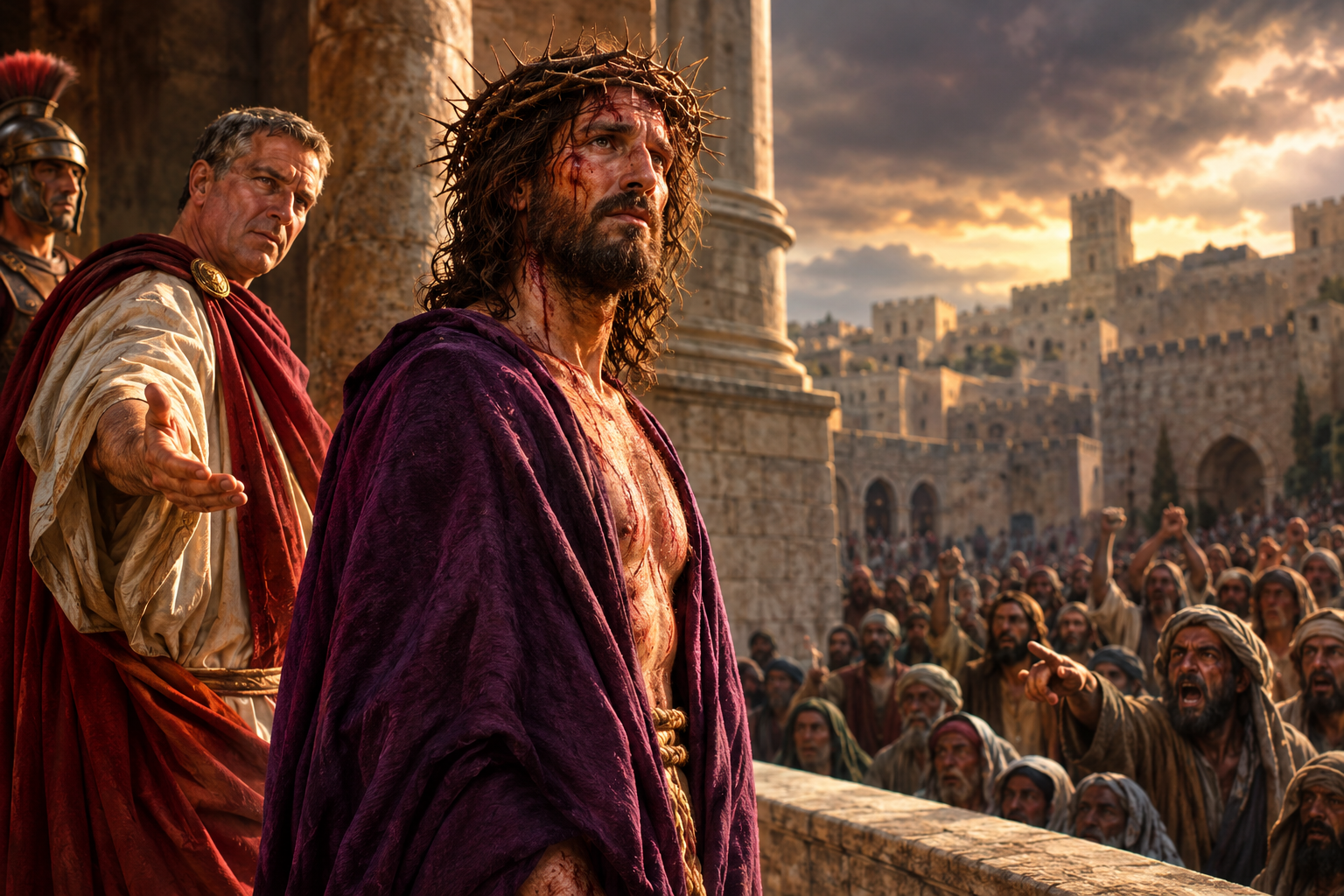


Behold the Man
"Behold the man" (Latin: Ecce homo) is a historic phrase originating from the New Testament, specifically the Gospel of John (John 19:5).
According to the biblical narrative, Pontius Pilate uttered these words when presenting Jesus Christ to the crowd before his crucifixion. Jesus had been scourged, mocked by Roman soldiers, and forced to wear a crown of thorns and a purple robe.
The phrase has since become deeply influential across several fields:
- In Art: Ecce Homo is a major theme in Western art history, depicted by master painters like Caravaggio, Hieronymus Bosch, Antonio Ciseri, and Titian, capturing the intense vulnerability and suffering of the moment.
- In Philosophy & Literature: Friedrich Nietzsche used the phrase as the title for his autobiographical work, Ecce Homo: How One Becomes What One Is, playing on the concept of human self-examination and transformation.
In the biblical context, the phrase "Behold the man" (Latin: Ecce homo) comes from the Gospel of John 19:5.
The Biblical Narrative
- The Setting: The scene takes place during the trial of Jesus before the Roman governor of Judea, Pontius Pilate. The religious authorities and the crowd had demanded Jesus' crucifixion, choosing the insurrectionist Barabbas to be released instead.
- The Torture: Before presenting Him to the public, Pilate had Jesus brutally scourged. Roman soldiers also mocked His claim to royalty by dressing Him in a purple robe, placing a woven crown of thorns on His head, and striking Him.
- The Presentation: Pilate brought Jesus out before the hostile crowd—battered, bleeding, and humiliated—and proclaimed:
"Behold the man!" (John 19:5, KJV)
Theological Significance
Christian theology views this moment through several profound lenses:
- The Suffering Servant: The phrase emphasizes the complete humanity and physical vulnerability of Jesus. He who was worshipped as divine stood before humanity stripped of dignity, bearing the full weight of physical agony.
- Pilate's Dilemma: Pilate's motivation was likely twofold: to appease the crowd by showing how severely Jesus had already been punished, and perhaps to evoke pity, hoping the sight of a broken man would satisfy them so they would drop demands for execution. Instead, the crowd shouted back, "Crucify him, crucify him!"
- The Ultimate Sacrifice: In Christian doctrine, this public humiliation marks the literal and symbolic moment where Jesus stands in the place of humanity—condemned by the world yet carrying out the path to redemption.
____________________________________________________________________________________________________________
1 The Necessity of His Humanity