the Feasts of Israel prophetic timeline
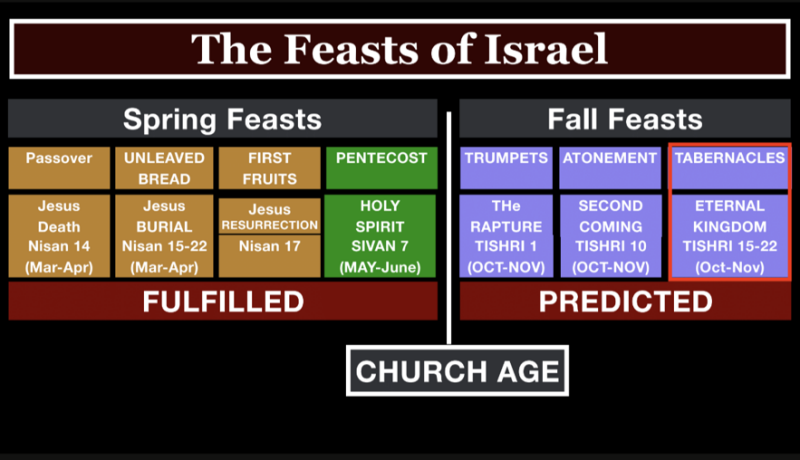
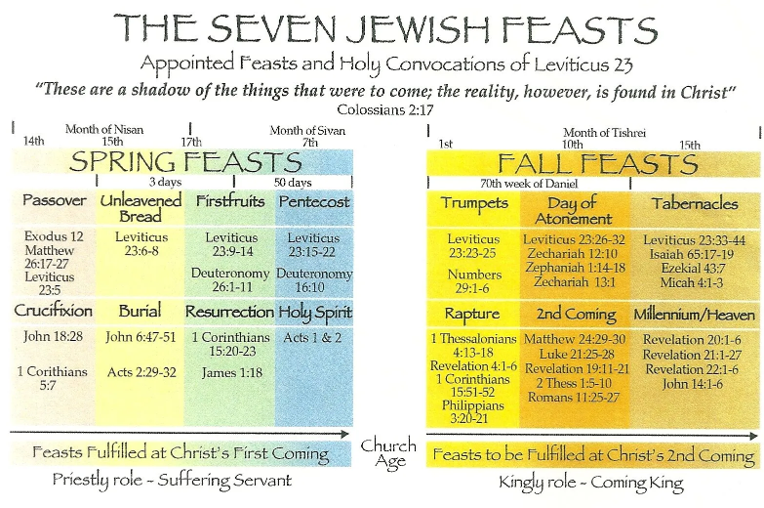
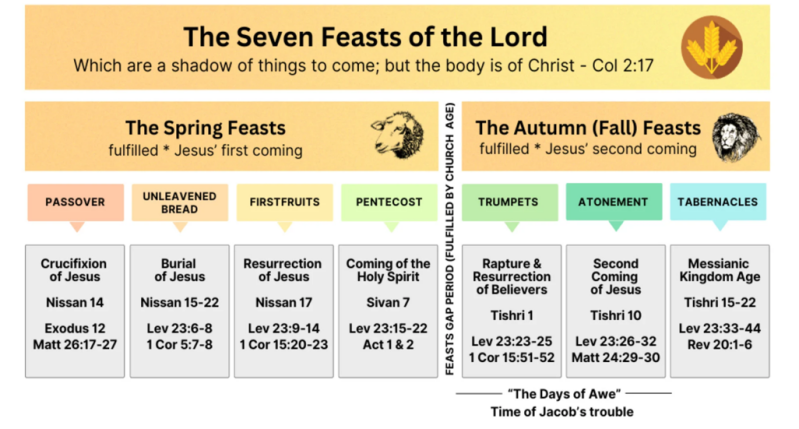
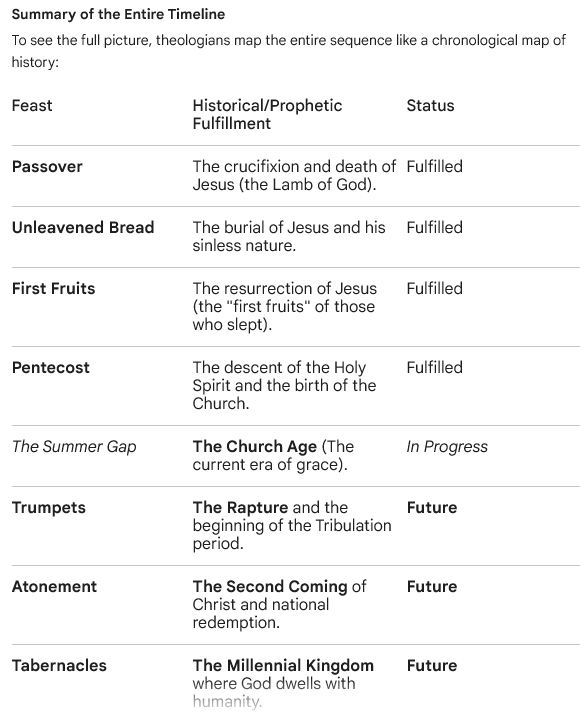
In order to understand the end times timeline, it is necessary to know the Jewish Feasts. Below is a reference
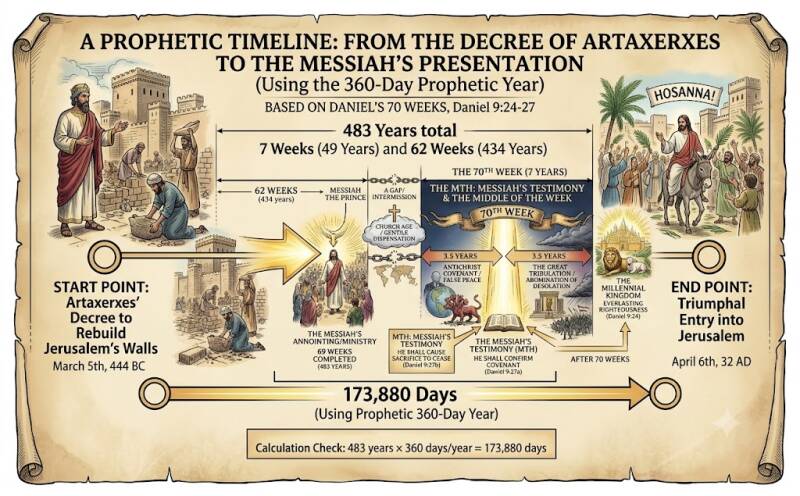
This one is a timeline spanning over 1000 years
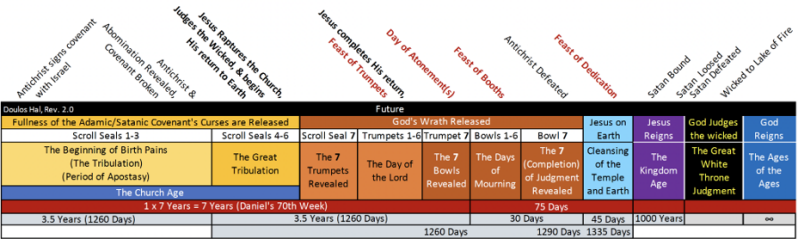
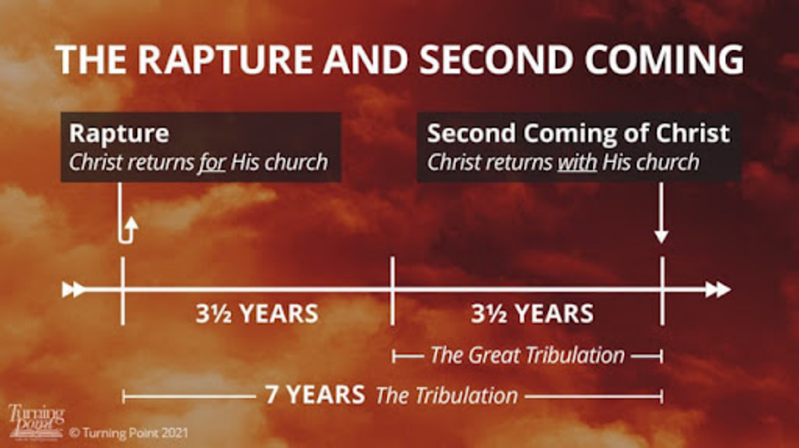
The seven Feasts of Israel (found in Leviticus 23) are viewed as a structural blueprint for the redemptive work of Jesus Christ.
They are split into two distinct seasons: the Spring Feasts, which have already been fulfilled historically by Jesus's first coming, and the Fall Feasts, which point directly to the events of the end times and His second coming. The "Church Age" acts as the historical gap between these two seasons.
Here is how the remaining Fall Feasts specifically relate to end-times events:
1. The Feast of Trumpets (Yom Teruah / Rosh Hashanah)
-
The Prophetic Connection: The Rapture & The Gathering
-
The Meaning: In scripture, trumpets were used to gather the assembly, sound an alarm, or announce the arrival of a king. In end-times timeline theology, this feast is highly associated with the Rapture of the Church. It signifies the moment Christ calls believers up, preceding the period known as the Tribulation (or Daniel's 70th Week).
- Feature / Tradition Description
- Biblical Name Yom Teruah (Leviticus 23:24), signifying the day of blowing the horn.
- Modern/Rabbinic Name Rosh Hashanah, marking the civil start of the Hebrew calendar year.
- Core Ritual Blowing the shofar (ram's horn) to awaken the soul for repentance.
- Timing The first and second days of the Hebrew month of Tishrei (in the autumn).
- Spiritual Theme The beginning of the Days of Awe (Yamim Noraim), focusing on judgment, reflection, and return to God.
- Traditional Foods Apples dipped in honey, round challah bread, and pomegranates to symbolize a sweet, fruitful new year.
What is in it for Christians?
Christian significance of the Feast of Trumpets (Yom Teruah / Rosh Hashanah):
- The Rapture & Gathering: Acting as a prophetic picture of the Rapture, it symbolizes Christ calling believers up before the Tribulation, much like a trumpet was historically used to assemble people or announce a king's arrival.
- Spiritual Awakening: It serves as a spiritual "alarm clock" to wake believers up, call them to repentance, and remind them that judgment is coming.
- Biblical Reminders: It reinforces the covenant of the Torah, highlights the reality of sacrifice, and encourages humility by looking back at the destruction of the Temple.
- Foreshadowing Christ's Return: It acts as a foreshadowing of the end of days (noted in 1 Corinthians 15) and serves as a reminder of the Lord's eventual return.
2. The Day of Atonement (Yom Kippur)
-
The Prophetic Connection: The Tribulation & The Second Coming
-
The Meaning: Historically the holiest and most solemn day of the Jewish year, this was the day of national cleansing and repentance. Prophetically, it aligns with the climax of the Great Tribulation—specifically the final deliverance and spiritual redemption of Israel when they recognize Jesus as Messiah, culminating in His physical Second Coming to Earth to defeat the Antichrist.
Day of Judgement, Day of Wrath
Judgment Day is referred to by several other names in the Bible, each emphasizing a different theological aspect of the event.
Yom Kippur (the Day of Atonement) is the Jewish holiday most directly associated with Judgment Day.
In the traditional Jewish High Holy Days, it represents the final day of judgment when God seals humanity's fate for the coming year, immediately following the period of reflection and repentance that begins on Rosh Hashanah (the Feast of Trumpets).
The Day of the Lord
Description: A frequent prophetic term focusing on God’s intervention, divine judgment against evil, and the ultimate vindication of His righteousness.
Key Scriptures: Joel 2:31, 1 Thessalonians 5:2, and 2 Peter 3:10.
The Great White Throne Judgment
Description: Specifically describes the final judicial session where all the dead stand before God to be judged according to their works as recorded in the books.
Key Scriptures: Revelation 20:11-12.
The Day of Wrath and Revelation of the Righteous Judgment of God
Description: Highlights the unveiling of God's righteous anger against unrighteousness and unrepentant human hearts.
Key Scriptures: Romans 2:5.
The Day of Christ / The Day of Jesus Christ / The Day of Our Lord Jesus Christ
Description: Often used in the Epistles to denote the future culmination of Christ's kingdom, accountability for believers, and ultimate reward.
Key Scriptures: Philippians 1:6, Philippians 1:10, and 1 Corinthians 1:8.
That Day
Description: A shorthand prophetic formula used throughout both the Old and New Testaments to point forward to the definitive day of reckoning and divine decision.
Key Scriptures: Matthew 7:22 and 2 Timothy 1:18.
The Day of Redemption
Description: Points to the final completion of the believer's salvation and the renewal of creation.
Key Scriptures: Ephesians 4:30.
The Day of Visitation
Description: Refers to a time when God steps in directly to evaluate human actions, sometimes used in contexts of both judgment and awakening.
Key Scriptures: 1 Peter 2:12.
3. The Feast of Tabernacles (Sukkot / Booths)
-
The Prophetic Connection: The Millennial Kingdom
-
The Meaning: This feast celebrates God "dwelling" or tabernacling with His people, marking a time of immense joy and rest after the harvest. In the prophetic timeline, it represents the Millennial Reign of Christ, where Jesus establishes His physical kingdom on Earth for 1,000 years of peace, eventually transitioning into the Eternal Kingdom (the Ages of the Ages).
Moedim translates to "appointed times" or "divinely set appointments." While often translated as "feasts" or "festivals" in English bibles (like in Leviticus 23), they aren't just random celebrations—they are prophetic rehearsals mapping out God's entire timeline for humanity through the Messiah.